
By Yext
May 9, 2024
How many publishers should a brand prioritize for discoverability?
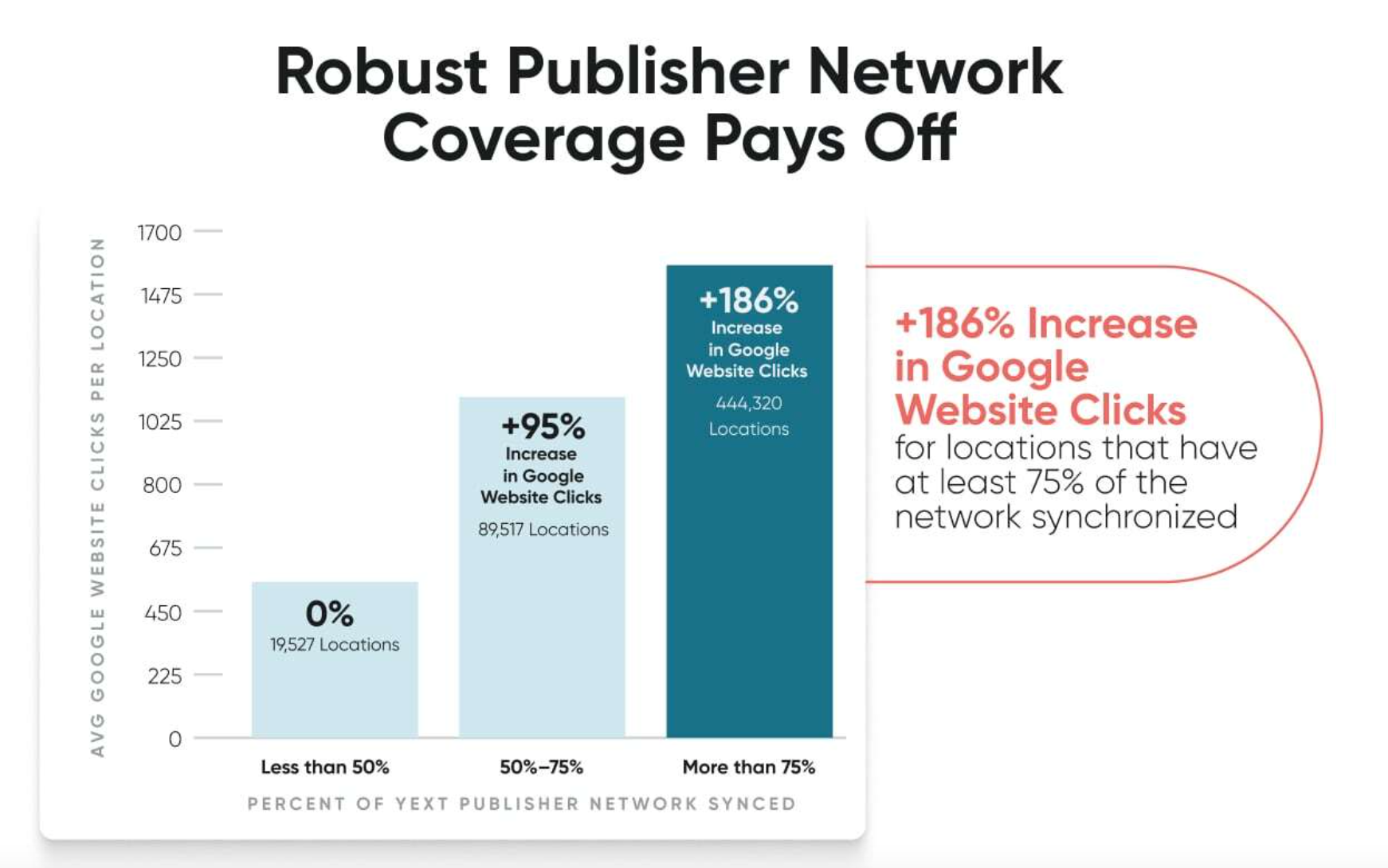
Yext analyzed over 620,000 global locations across 15 industries managed within the Yext platform and found that locations syncing data with less than 50% of Yext’s network – which consists of more than 200 publishers – saw the least amount of website traffic from Google. The data also indicated that locations syncing 50-75% of Yext’s network saw an average +95% increase in website clicks from Google, while locations syncing more than 75% of Yext’s network saw a +186% increase. Additionally, the data showed over +17% of a typical location’s website traffic came from non-Google publishers.
That’s because presenting consistent information everywhere that search engines and AI tools gather information helps increase confidence in that information. If a brand has less information available online, or worse, it’s inconsistent, these systems won’t know if the information is correct. They want their customers to receive accurate answers, so brands with more proof points to pull from are prioritized.
When we asked Google’s Gemini, “why does having a consistent digital presence on more publishers result in more Google website clicks?” – the answer confirmed our findings.
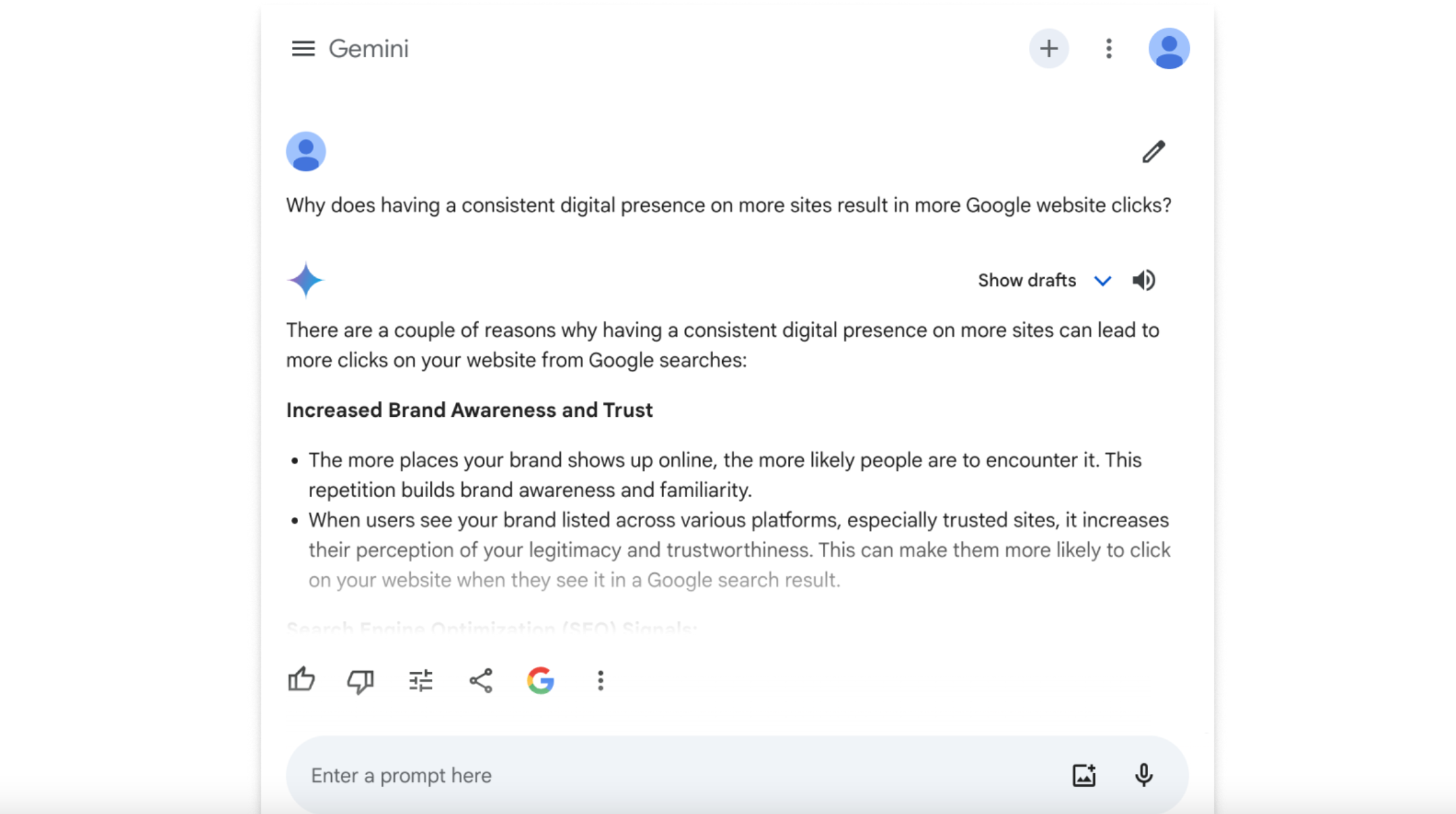
Try it yourself on both Google Gemini and OpenAI’s ChatGPT.
How does coverage across the publisher network impact AI-search?
Across the board, AI models are reshaping search — with Gartner predicting a 25% drop in search volume as customers move to chatbots and virtual agents to answer their questions. And remember: these technologies use a variety of data sources to pull and collect information when they generate answers – including smaller publishers.
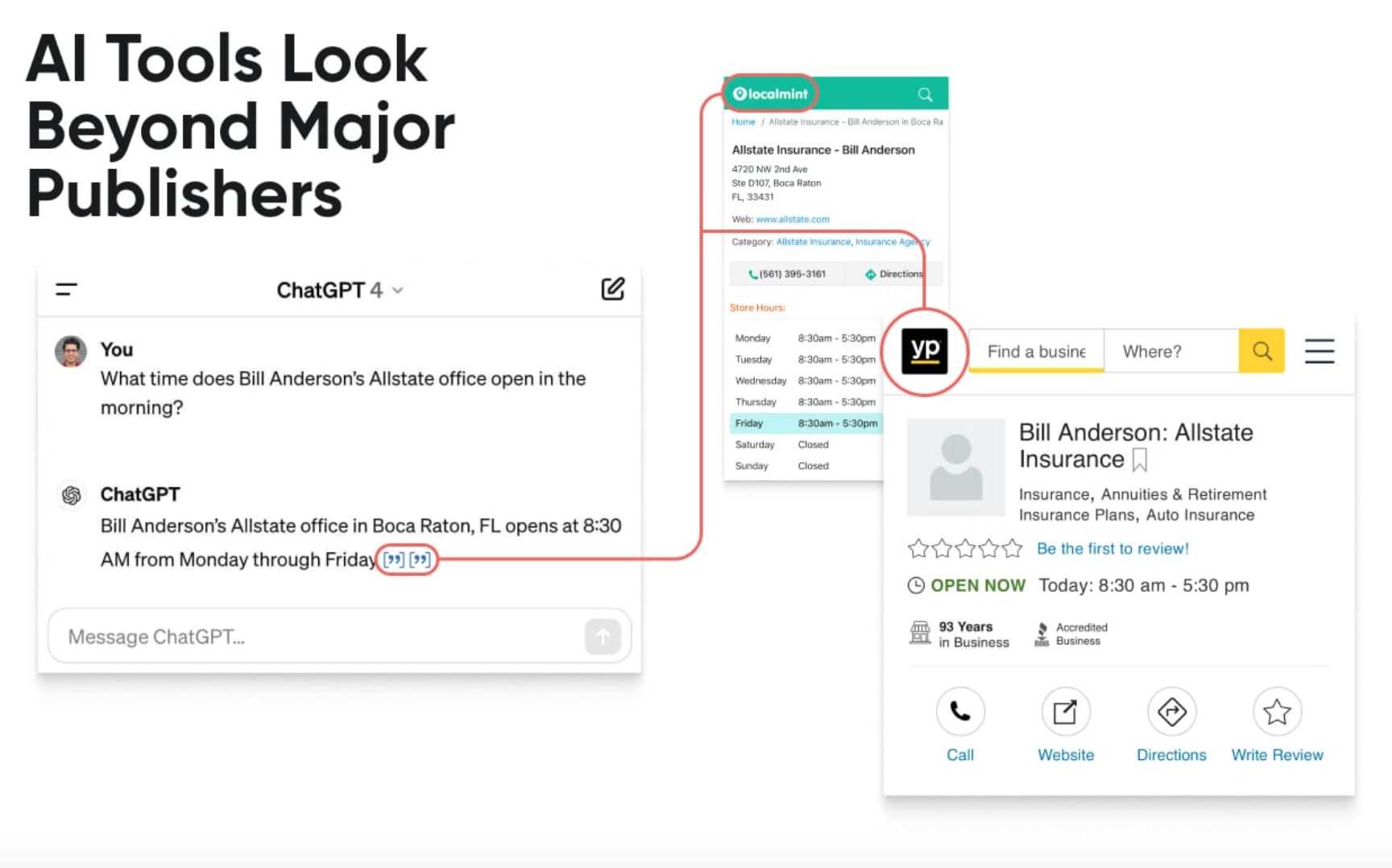
When ChatGPT is prompted to cite its sources after providing an answer about a local financial representative, it doesn’t reference information from big publishers like Google, Facebook, Bing, or Apple. Instead, it cites source data from YP.com and Localmint. Take a look:
But as search evolves and customer behavior changes, syncing information to an extended network of publishers is important far beyond Google. It sets brands up to win in an increasingly fragmented search landscape.
Beyond Gartner’s prediction about AI chatbots and other virtual agents taking search share of voice, social media search is also on the rise. According to Google, nearly 40% of Gen Z may prefer searching on TikTok and Instagram over Google Search and Maps. In Europe, brands are already noticing a decline in Google traffic due to the implementation of the Digital Markets Act — making other publishers more important.
No matter where a brand operates, non-Google publishers might already matter more than you think: the typical location sees over 17% of all their digital engagement (including website traffic and detailed profile views) come from non-Google publishers.
The truth is that no one knows exactly how search might evolve over the next three to five years. But managing your brand’s digital presence is the best way to prepare for these inevitable changes in the customer journey. Consistent information – widely published across third-party publishers – offers search and AI the strong signals they need to trust your brand over your competition.
Click here to read the full report and study details.
*It’s important to note that while the correlation is strong and statistically significant, causation cannot be definitively claimed due to the complex nature of Google’s algorithm.
The Power of a Digital Presence: How Consistent Information Improves Brand Discoverability

Holiday 2023 Insights: Predict Your Busiest Days, Traffic Surges With The Search Data Hub
Yext Showcases Knowledge Injection Research With Large Language Models
Track Search Volume, Customer Actions, and More With Yext’s New Data Hub
Yext Data Science Presents Research at IEEE Big Data 2022 Conference

The Future of Financial Services: How AI is Transforming Digital Experiences